When No One Remembers Your Birthday: The Silent Weight of Being Invisible
A raw, honest exploration of modern loneliness through one woman's story. Discover why birthdays hurt when you're forgotten, and how to find your way back when you feel invisible to the world.
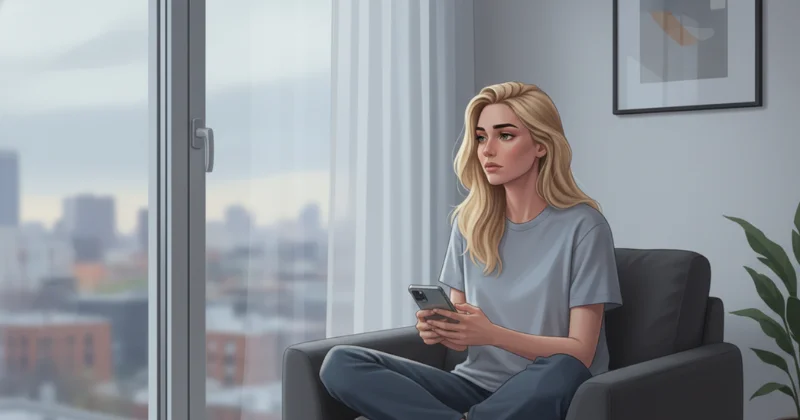
There's a specific kind of silence that fills a room when no one remembers your birthday.
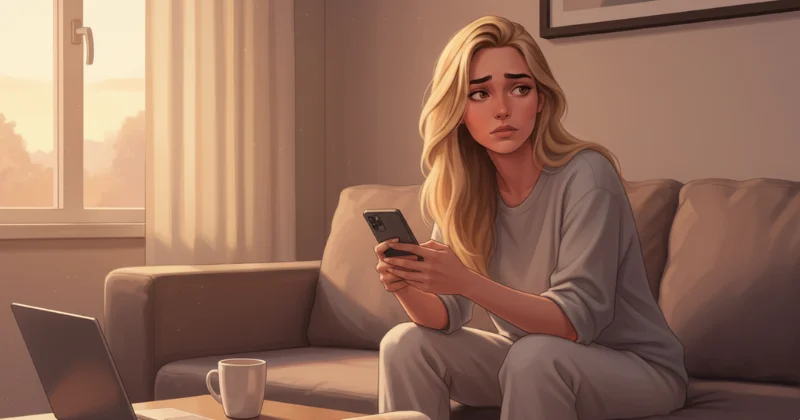
It's not just quiet. It's heavy. It settles on your chest and makes breathing feel like work. You keep checking your phone - casually, like you're not really expecting anything, but you are. God, you are. And every time the screen lights up with some promotional email or spam notification, something inside you cracks a little more.
Twenty-seven candles you won't blow out. Twenty-seven years of learning, over and over, what it feels like to be forgettable.
The Problem: When Invisible Becomes Your Default Setting
She woke up that morning with the smallest flicker of hope. Maybe this year would be different. Maybe someone would remember. Maybe someone would care.
But by noon, the silence was deafening.
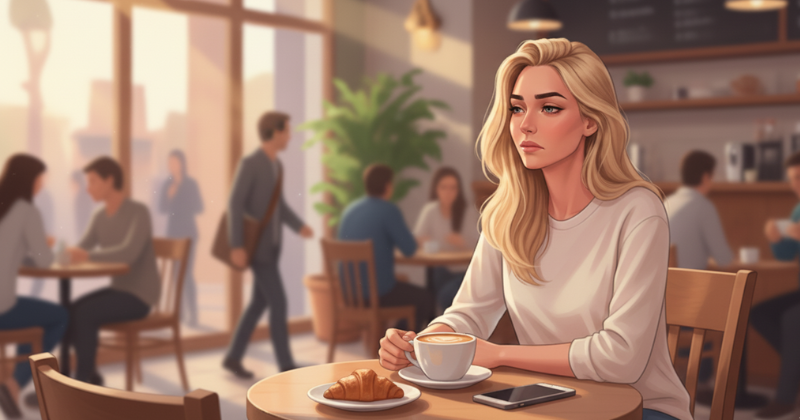
No messages. No calls. Not even a generic "HBD" from someone who Facebook reminded. The people she thought were friends - the ones she'd remembered birthdays for, sent thoughtful messages to, shown up for had simply... forgotten she existed.
Or worse: they remembered and chose not to reach out anyway.
There's something uniquely crushing about a forgotten birthday. It's not really about the day itself, is it? It's about what it represents. It's proof -tangible, unavoidable proof, that you don't occupy space in anyone's mind. That when people think about who matters to them, your name doesn't come up.
You're the background character in everyone else's story. The extra. The one the camera pans past without focusing.
And when you already feel invisible 364 days a year, that one day just confirms what you've been afraid of all along: nobody would really notice if you disappeared.
The Weight You Carry Alone
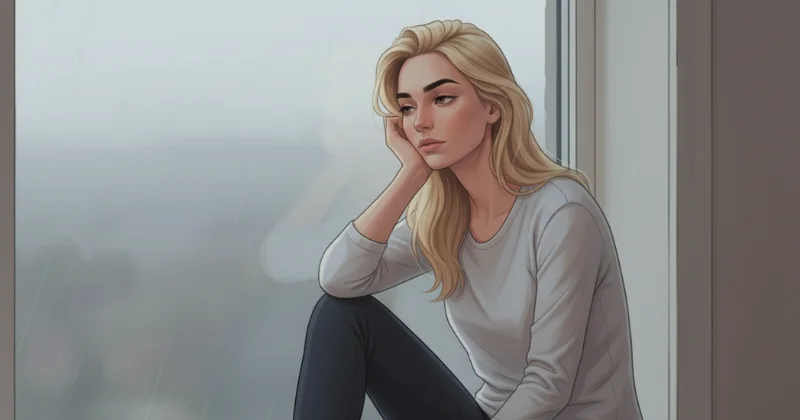
Living in a foreign country makes everything sharper. There's no accidentally running into someone you know at the grocery store. No familiar faces that at least provide the illusion of connection. Just strangers speaking a language that sometimes still feels foreign, even after all this time.
Her mom calls - the only person who always remembers and she can hear the worry in her voice. The unspoken questions: Are you okay? Are you eating? Are you taking care of yourself? But there are other things they don't talk about. Like her dad's illness. Like how much it costs to stay strong for everyone when you're crumbling inside.
Her mom is the only person who genuinely sees her. And even that relationship is colored by guilt, because she sees the pain in her mother's eyes, the worry that maybe she made a mistake letting her daughter move so far away, to a place where she's so profoundly alone.
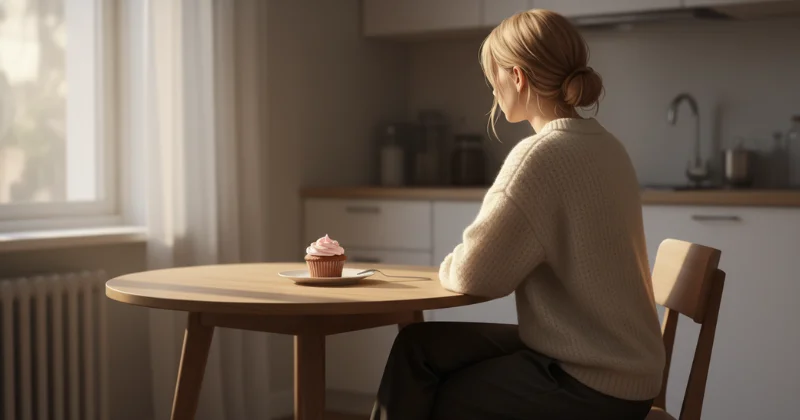
The apps make it worse, somehow. She thought maybe, just maybe, meeting people would be easier in the digital age. But swipe after swipe, there's nothing. Not even matches. Not even the hollow validation of someone finding her attractive enough to take a chance on.
Is it a sin to be ugly? That's the thought that creeps in during the dark hours. The belief that somehow, on some fundamental level, there's something wrong with her face, her body, her entire existence that makes people recoil. That makes her unworthy of love, of friendship, of basic human acknowledgment.
She knows it's not rational. But loneliness doesn't deal in rationality. It deals in the stories we tell ourselves at 3 AM when the silence becomes unbearable.
The Spiral: How Loneliness Breeds More Loneliness
The friends she did have, the ones who used to text back, who used to include her in plans -they've all faded. Not all at once. Never all at once. That would almost be easier, in a way. Instead, it's a slow fade. An unanswered text here. A "sorry, we're busy" there. Plans that somehow always happen without her.
She became the backup plan. The "maybe if no one else is around" option. The safety net that people kept around for their own convenience but never really valued.
And when you're already struggling with loneliness, those small rejections feel catastrophic. Each one confirms what you're afraid of: that you're not worth choosing. That you're fundamentally unlikeable in some way you can't identify or fix. That there's something about you that makes people leave.
So you stop reaching out. Because reaching out and being ignored is somehow worse than not trying at all. At least if you don't try, you can maintain the fiction that maybe, possibly, if you did reach out, someone would respond.
The loneliness creates a fortress. You become wary, protective, skeptical. You expect rejection because you've experienced it so many times. And that expectation? It changes how you interact with people. They can sense your defensiveness, your hurt, your desperation for connection and ironically, it pushes them away.
It's quicksand. The harder you struggle, the deeper you sink.
The Existential Weight: When Loneliness Becomes About More Than Being Alone
But here's what people who haven't experienced chronic loneliness don't understand: it's not really about wanting more friends or finding a partner. I mean, yes, those things would be nice. But what's really happening underneath is something deeper and scarier.
It's the feeling that your existence doesn't matter. That you could vanish tomorrow and the world would keep spinning without missing a beat. That your place in the universe is fundamentally irrelevant.
She dreams of marriage - not because she's romanticizing it, but because she wants proof that she's worth choosing. That someone would look at her, with all her flaws and fears and messiness, and decide she's worth staying for. That she's worth building a life with.
She's a bit religious, and she imagined something pure and meaningful. But every rejection chips away at that hope. Every birthday that passes unmarked. Every night alone in a foreign country where even the streets feel unfamiliar.
The prayer she used to find comfort in now feels like shouting into a void. She tries to stay strong. She tries to believe. But faith requires hope, and hope gets harder to hold onto when every day confirms your worst fears about yourself.
The Breaking Point: When You Don't Know How Much More You Can Take
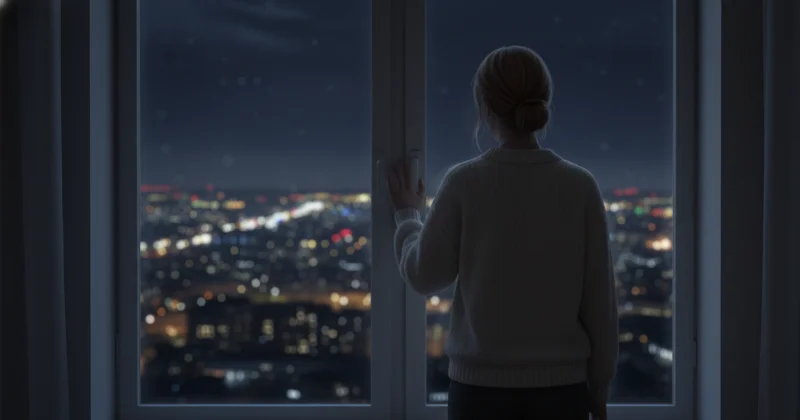
There's a thought that enters your mind when loneliness becomes too heavy. It starts as a whisper and gradually gets louder: I don't know how much more of this I can take.
It's not necessarily about wanting to end things (though for some, it tragically goes there). It's about the exhaustion of carrying this weight. Of waking up every day to the same emptiness. Of going to bed every night with the same ache.
It's about the fear that this is it. That this is what life will be. That you'll never have the family you dream about. That you'll always be the shadow in the room, the forgotten one, the option nobody chooses.
And on a birthday - that one day that's supposed to be about celebrating your existence - that fear becomes unbearable. Because if no one remembered today, of all days, then what hope is there for any other day?
Finding Light in the Dark: What Actually Helps
If you're reading this and seeing yourself in her story, I need you to know something: you're not broken. You're not unloveable. And you're not alone in feeling alone.
The first thing that helps and I know this sounds counterintuitive-is acknowledging that what you're feeling is valid. You're not being dramatic. You're not asking for too much by wanting human connection and recognition. These are fundamental human needs, and being deprived of them is legitimately painful.
Start Where You Are
You don't have to fix everything at once. You don't have to suddenly become a social butterfly or find your soulmate by next Tuesday. You just have to start where you are.
Sometimes that means reaching out to one person - even if it's scary, even if you expect to be ignored. Send that text. Make that call. Yes, maybe they won't respond. But maybe they will. And one genuine connection, one real conversation, can be a lifeline.
Share Your True Self (Even If It's Terrifying)
One of the patterns in chronic loneliness is hiding who you really are. We show people the version of ourselves we think they want to see - the strong one, the funny one, the one who has it together. But connection doesn't happen in the performance. It happens in the vulnerability.
Find someone - a therapist, a online support group, even an anonymous forum - and start sharing what's really happening inside. The messy, scared, lonely parts. Not because it'll immediately solve everything, but because being seen, truly seen, is the beginning of feeling less invisible.
Build Meaning Beyond Connection
This is hard to hear when you're desperately lonely, but it's important: your worth isn't determined by whether people remember your birthday or swipe right on your profile. You have inherent value simply because you exist.
Finding meaning and purpose in your life - through work that matters to you, creative expression, helping others, spiritual practice, whatever resonates - doesn't eliminate loneliness, but it gives you something to hold onto when the loneliness threatens to consume you.
Consider a Different Kind of First Step
Sometimes the gap between "profoundly isolated" and "forming meaningful human connections" feels insurmountable. The social anxiety is too high. The fear of rejection too paralyzing. The skills too rusty.
And that's where something like Jenni can actually help -not as a replacement for human connection (nothing should be), but as a bridge. A safe space to practice being your authentic self without the fear of judgment or rejection. A place to untangle those spiraling thoughts about being unloveable or forgettable.
Think of it as emotional physical therapy. When you've been injured, you don't immediately run a marathon. You start with small, supported movements. You rebuild strength gradually. You practice in a safe environment before you test yourself in the real world.
Talking with Jenni isn't about giving up on human connection - it's about building the confidence and clarity you need to pursue it. It's about having someone (or something) that will always show up, always listen, always remember you exist, while you work on the harder task of building human relationships.
Try talking with Jenni. Not because it's the answer to everything. Not because AI can replace human warmth. But because sometimes the journey back to connection starts with a single conversation where you're not afraid to be real.
A Different Birthday
Next year's birthday doesn't have to be the same as this year's. Not because everyone will suddenly remember, or because you'll magically have dozens of friends, or because you'll have found that perfect relationship.
But because you might have taken small steps toward connection. Because you might have shared your real self with someone and survived it. Because you might have found glimmers of meaning and purpose that make the lonely days more bearable.
Because you might have learned that being forgotten by others doesn't mean you have to forget yourself.
You're not invisible. You're not unworthy. And your birthday - your existence matters, even when the world forgets to acknowledge it.
Start small. Start where you are. But start.
Because twenty-eight could be different. Not perfect. But different. And sometimes different is enough.