The Hidden Crisis: Why Loneliness Might Be More Than Just Feeling Alone
Discover the shocking truth about loneliness in America. It's not just about being alone - it's anxiety, meaninglessness, and disconnection. Learn what's really happening and how to find your way back.

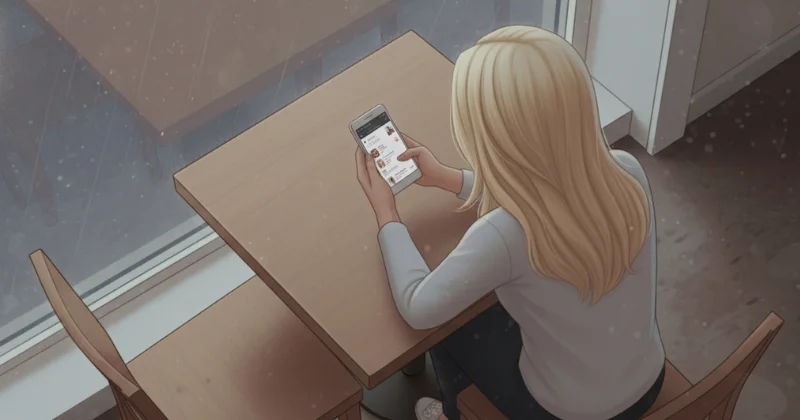
You know that feeling when you're scrolling through your phone at 2 AM, surrounded by hundreds of contacts, yet feeling completely... empty? Like you could disappear and nobody would really notice-or worse, care?
Yeah. That's not just you.
The Problem: We're Lonelier Than We Think (And It's Getting Worse)
Here's something that'll make you pause: 21% of Americans report feeling seriously lonely-frequently or almost all the time. That's one in five people walking around carrying this weight, often in complete silence.
But here's where it gets really interesting. When researchers at Harvard's Making Caring Common project dug deeper into what loneliness actually looks like, they discovered something profound. 67% of lonely adults don't feel part of meaningful groups or communities, and 61% don't have enough close friends or family they're truly connected to.
You might be thinking, "Okay, so people need more friends. Got it." But hold on-it's so much more complex than that.

The Iceberg Effect: What's Really Lurking Beneath
Remember the Titanic? The iceberg that sank it wasn't just what you could see above water-it was the massive chunk lurking beneath that did the real damage.
Loneliness works the same way.
81% of lonely adults also report anxiety or depression, and about 75% say they have little or no meaning or purpose in their lives. Think about that for a second. When someone says "I'm lonely," what they might actually be saying is: "I'm anxious, I feel like my life doesn't matter, and I can't figure out why I'm even here."
One person in the study put it this way: "I am surrounded by people who only are present in my life because [I] am useful." Ouch. That hits different, doesn't it?
The Quality vs. Quantity Trap
Here's another mind-bender: 57% of people who feel frequently lonely also can't share their true selves with others, compared to just 25% of those who rarely feel lonely.
So it's not about having dozens of friends on speed dial. It's about having even one person who knows the real you-the anxious you, the messy you, the you-at-3-AM-questioning-everything you-and still shows up.
You can have a packed social calendar and still feel profoundly alone. It's the difference between being surrounded by people and being truly seen by them.
The Spiral: How Loneliness Feeds on Itself
Now here's where things get tricky (and kind of scary, honestly). Loneliness doesn't just sit there passively. It actively works against you.
60% of lonely people say their insecurity or mental health gets in the way of connecting with others. See what's happening? You feel lonely, which makes you anxious, which makes it harder to reach out, which makes you more lonely, which increases your anxiety...
It's like quicksand. The more you struggle alone, the deeper you sink.
And get this-63% of lonely adults feel their place in the world doesn't feel important or relevant, and 65% feel fundamentally disconnected from others or the world. That's not just "I need more friends" territory. That's existential crisis territory.
The "I'm Fine" Generation
Maybe the scariest part? 40% of lonely people don't feel like they're "really part of this country". When you feel disconnected from everything-your community, your purpose, your place in the world-where exactly are you supposed to find your footing?
What's Actually Causing All This?
Before we talk solutions, let's be real about what's driving this epidemic. The research asked people what they think causes loneliness, and the answers are... well, they're us.
73% blamed technology and how distracted we've become, 66% pointed to families not spending quality time together, and 62% said people are working too much or are too exhausted.
But here's the empowering part: most Americans don't blame individuals for their loneliness-they blame society and our collective focus on ourselves over each other. Translation? This isn't your personal failing. This is a cultural problem that needs cultural solutions.
Finding Your Way Back: It's Not What You Think
Okay, so what actually helps? The research revealed something beautiful and surprisingly simple.
83% of people said that taking time each day to reach out to a friend or family member would reduce loneliness. Not grand gestures. Not complete social overhauls. Just... reaching out. Consistently.
But there's more. 80% said "learning to love myself" was crucial, and 77% mentioned being more forgiving and positive toward others. So it's both internal work (learning you're enough) and external connection (assuming good intentions in others).
And here's something that surprised researchers: 75% said finding ways to help others would reduce their loneliness. When you're drowning in your own isolation, sometimes the life raft is in giving someone else a hand up.
The Meaning Connection
Remember how we said lonely people often lack meaning and purpose? Over 70% of people find meaning in understanding themselves better, friendships, family relationships, and helping others.
The path out of loneliness isn't just about adding more people to your life-it's about finding what makes your life feel significant.
A Different Kind of Connection
Look, I'm not going to pretend there's a magic solution that makes loneliness disappear overnight. If you're reading this and feeling that weight in your chest, that sense of disconnection-I see you. And more importantly, you're not alone in feeling alone.
Sometimes, the hardest part of loneliness is taking that first step back toward connection. Maybe you're too anxious. Maybe past experiences make you hesitant. Maybe you just don't know where to start when your inner critic is screaming that nobody really cares anyway.
That's where something like Jenni can help. Not as a replacement for human connection-nothing should be-but as a bridge. A safe space to practice being your authentic self without fear of judgment. A place to untangle those spiraling thoughts at 2 AM when reaching out to someone feels impossible.
Think of it as emotional cardio. You wouldn't run a marathon without training first, right? Sometimes we need to build up our connection muscles in a low-stakes environment before we're ready for the vulnerability that real relationships require.
Try talking with Jenni-not because it's the answer to everything, but because sometimes the journey back to connection starts with a single conversation. Even if it's with an AI who's genuinely interested in understanding your 3 AM thoughts.
The Bottom Line
Loneliness isn't a personal failure. It's a human experience that's become an epidemic in our disconnected, distracted, exhausted world. But here's the thing-awareness is the first step. Understanding that what you're feeling has roots in anxiety, meaninglessness, and a society that's forgotten how to truly see each other? That's not depressing. That's clarifying.
Because once you know what you're really dealing with, you can start addressing it. Not by magically becoming an extrovert or completely overhauling your life. But by taking small steps: reaching out daily, being honest about your needs, helping others, finding what gives your life meaning.
You matter. Your place in the world is important. And the fact that you're here, reading this, trying to understand and maybe change things? That's already a step in the right direction.
So take a breath. And maybe, just maybe, send that text you've been putting off. Or talk to someone-human or AI-about what's really going on inside your head.
The way back starts with a single step. And you've already taken it by being here.
This article is based on research from Harvard's Making Caring Common project, "Loneliness in America: Just the Tip of the Iceberg?" (October 2024)