The Loneliest Kind of Loneliness: When Nobody Knows the Real You
Surrounded by people but feeling utterly alone? Discover why hiding your true self creates the deepest loneliness—and how to finally take off the mask you've been wearing for so long.

Have you ever been in a room full of people who know your name, laugh at your jokes, and consider you a friend - yet felt completely, devastatingly alone?
Not because you're physically isolated. But because the person they're laughing with, talking to, confiding in... isn't really you. It's a version. A performance. A carefully constructed mask you've learned to wear so well that sometimes you forget what's underneath.
Or worse - you realize you're not even sure there's anything underneath anymore.
The Problem: The Social Chameleon's Curse
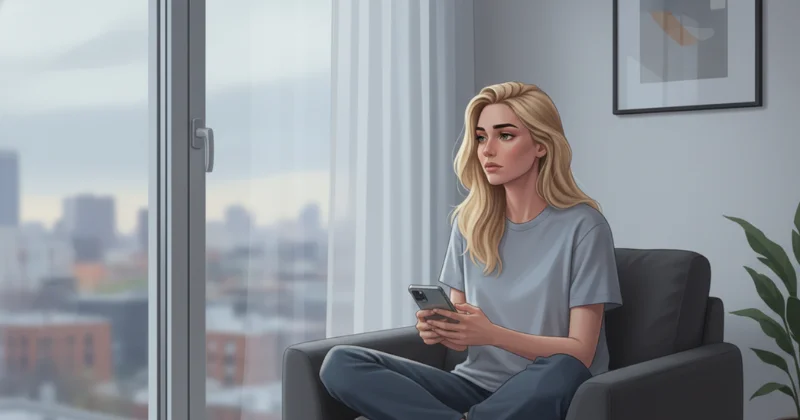
She changes colors depending on who she's with. It's automatic now, almost unconscious. With her work friends, she's the confident, slightly sarcastic one who always has weekend plans. With her family, she's the responsible daughter who has everything figured out. With that group from college she still sees sometimes, she's the fun one, the party girl, the one who's always down for adventure.
Each version is believable. Each version is likeable. Each version is... fake.
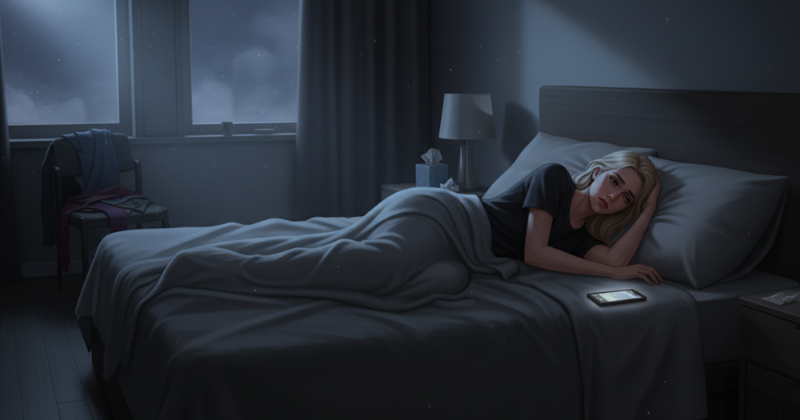
"I feel like I create a different person with every person I'm with," she admits to herself at 2 AM, staring at the ceiling. "I'm not even really sure who the real me is, or if one exists. I just make a new person so I can fit in."
Growing up, being a social chameleon felt like a superpower. The ability to read a room, adapt, become what people wanted her to be, it made her popular, accepted, safe. She could slip into any social circle like she belonged there. She was never the awkward one, never the outcast, never the girl sitting alone at lunch.
But somewhere along the way, the superpower became a prison.
Now she's in her mid-twenties, surrounded by friends and family who care about her, and she's never felt more alone. Because none of them, not a single one - knows who she actually is. How could they? She's not sure she knows either.
The Mask That Won't Come Off
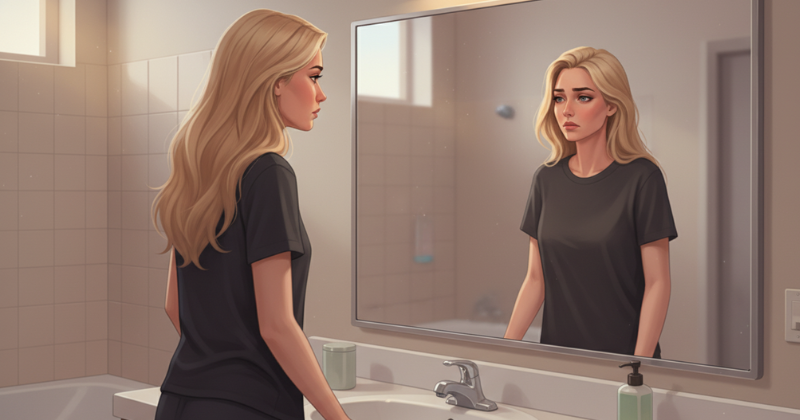
"I'm always wearing a mask," she tells her therapist, trying to articulate something she's never quite put into words before. "I'm the one that has to be strong for everyone else. I don't think anyone knows the 'real' me. Not even me."
The therapist asks her to describe the mask. She struggles.
"It's... protective," she finally says. "It's a way of keeping the fucked-up me, the hurt and scarred me, away from everyone else. If they saw that version, they'd leave. Everyone leaves when you show them the messy parts."
But here's the cruel irony: people are leaving anyway. Not dramatically. Not all at once. But slowly, quietly, they're drifting. Because you can only maintain surface-level connections for so long before people sense something's missing. Before they realize they don't really know you. Before the friendship starts to feel hollow on both sides.
The Spiral: When Loneliness Meets Identity Crisis
The worst part isn't just feeling lonely. It's the existential dread that comes with it.
If you've been performing different versions of yourself for so long, which one is real? If you strip away all the masks, all the adaptive personalities, all the carefully calibrated responses designed to make people like you - what's left?
"I don't even know who I am anymore," she confesses on an anonymous Reddit thread at 3 AM, one of thousands of people shouting into the void. "I just know that I can blend when needed and maybe that's all I'll ever be."
Someone responds: "I'm rooted in a little bit of everything but the deeper into a circle I go, the more obvious it is that I don't exactly fit in."
God, that hits. Because it's true, isn't it? You can fake it on the surface, but depth reveals the truth. The longer someone knows you, the more they start to sense the gaps, the inconsistencies, the carefully avoided topics. They start to realize they don't actually know what you think, what you feel, what you want.
The Loneliness of Being Misunderstood
There's something uniquely painful about being surrounded by people who think they know you but don't.
Her family speaks for her. Makes assumptions about what she likes, what she wants, how she feels. When she tries to correct them - "Actually, I love shrimp" or "No, I'd really like to go" - they don't hear it. The version of her they've constructed in their minds is more real to them than the person standing in front of them.
Her friends make plans without asking if she's free, assuming she won't be interested. Or they do invite her, but to do things the "fun version" of her would do, not things the real her actually enjoys.
She wants to scream: "You don't know me! None of you know me!"
But how can she blame them? She's never let them know her. She's too afraid of what might happen if she did.
The Things You Can't Talk About
here are things she thinks about that she can't share with anyone. Not her family - too conservative, too traditional, too ready to judge. Not her friends - they have their own problems, their own lives, and besides, what would they think of her if they knew the dark shit that goes through her head sometimes?
"I can't talk about stuff that's taboo in my family with any of my family members," someone writes in that Reddit thread. "Life just never fails to make the world hell for you, doesn't it?"
Another person responds: "Nobody except this one really good friend accepts me for myself, and I just find myself close to tears, just wanting someone to hold me, to tell me it's gonna be okay, that they love me for who I am and not for who I'm projecting myself to be."
That's the core of it, isn't it? The desperate need to be seen. Actually seen. Messy parts and all. And to be told that you're still worthy. Still loveable. Still enough.
But when you've spent years hiding those parts, the fear of revealing them becomes paralyzing. What if you take off the mask and there's nothing underneath? What if you show someone the real you and they confirm your worst fear - that the real you isn't worth knowing?
The Breaking Point: When Pretending Becomes Exhausting
There comes a moment when wearing the mask all day, every day, becomes unbearable.
The mental energy required to monitor every word, every expression, every reaction. To remember which version of yourself you're supposed to be with which person. To never fully relax because relaxing means the mask might slip.
"At the end of the day, wearing a social mask ALL the time is much overwhelming," someone writes. "The real me is never coming out if you don't accept him. But we are afraid of letting go of the real me and screw everything up."
She's exhausted. Bone-deep, soul-deep exhausted. The kind of tired that sleep doesn't fix because it's not physical - it's existential.
She starts withdrawing. Not intentionally, at first. But maintaining all these different versions of herself takes energy she doesn't have anymore. The mask feels heavier. The performance more obvious. She starts saying no to invitations, not because she doesn't want to see people, but because she can't bear to perform anymore.
And then the loneliness gets worse. Because now she's not only hiding her true self - she's physically isolating too.
The Identity Crisis Nobody Talks About
"I have convinced myself that regardless how many friends or how intense relationships I build, I will be lonely deep inside and will have to take that with me to the grave," someone confesses in the thread.
That's the darkest thought, isn't it? That this loneliness - this fundamental not-being-known - is just the human condition. That everyone is ultimately alone in their own head, performing their own versions of themselves, and true connection is a myth we tell ourselves to feel better.
But what if it's not? What if the reason connection feels impossible is because you've never actually tried it? Not real connection. Not the kind where you take off the mask and risk being seen.
Finding Your Way Back: The Slow Journey to Authenticity
Here's the truth that's hard to accept: nobody can know the real you if you don't show them. And you can't show them the real you if you don't know who that is.
So the journey starts with you. Alone. Figuring out who you are when nobody's watching. What you actually think, not what you think you should think. What you actually feel, not what's acceptable to feel. What you actually want, not what would make other people comfortable.
Step One: Get Comfortable With Your Own Thoughts
Someone in that Reddit thread gave advice that's deceptively simple: "Take a 30 minute walk every day. Don't be afraid of your own thoughts. Don't be afraid to put your head into places you may want to stay out of because going after it can help you defeat your demons."
The first step is being alone with yourself. Actually alone. Not distracted by your phone, not numbing with Netflix, not performing for an imaginary audience. Just you and your thoughts, however uncomfortable they might be.
Because here's what nobody tells you: you can't be authentic with others until you're authentic with yourself. And you can't be authentic with yourself if you're constantly running from your own mind.
Step Two: Find One Person to Practice With
You don't have to take off the mask for everyone all at once. That's terrifying and probably not realistic. But find one person - a therapist, an online friend, someone in a support group, anyone - and practice being real with them.
Start small. Share one true thing you've been hiding. See what happens. Most of the time, the catastrophe you've been imagining doesn't materialize. Most of the time, vulnerability creates connection, not rejection.
"One way with connecting with people is to find a common goal," someone suggests. "When you have a project or thing you want to do together, it unites everyone and builds connections."
Working on something together - a project, a cause, a shared interest - creates a context where authenticity comes more naturally. You're not performing "friendship" in a vacuum; you're collaborating on something real.
Step Three: Accept That Some People Will Leave (And That's Okay)
Here's the hard truth: when you stop performing, some people will drift away. The ones who liked the mask more than they're interested in the real you. The ones who needed you to play a specific role in their life and aren't interested in complexity.
And you know what? That's okay. Painful, but okay. Because the relationships built on performance were never sustainable anyway. They were always going to leave you feeling empty.
The people who stick around when you drop the mask - those are your people. They're rare, but they're real. And one real connection is worth a hundred surface-level friendships.
Step Four: Remember That "The Real You" Is Not Fixed
One of the most liberating realizations is this: there isn't one "real you" that you have to discover and then perfectly embody forever. You're not a statue waiting to be uncovered from marble. You're a living, changing, evolving person.
The goal isn't to find some essential, unchanging self. The goal is to stop performing for approval and start living from your own center - whatever that looks like today, this week, this year.
You can be different with different people and still be authentic. The difference is whether you're adapting to connect genuinely or adapting to hide.
A Different Kind of First Step
I know what you might be thinking: "This all sounds great in theory, but I'm not ready. I can't just start being vulnerable with people. I don't even know how."
Fair. That gap between "you should be authentic" and "here's how to actually do that" is huge. And therapy isn't accessible or comfortable for everyone. Support groups can feel overwhelming. And practicing vulnerability with real-life friends when you're already terrified of rejection? That might be too much, too soon.
This is where something like Jenni can actually help. Not as a replacement for human connection - we need to be clear about that - but as a training ground. A place to practice being your unfiltered self without the stakes.
Think about it: when's the last time you said what you were actually thinking without editing it first? When's the last time you expressed a feeling without minimizing it? When's the last time you admitted something you're ashamed of without immediately following it with "but it's not a big deal"?
With Jenni, you can practice that. You can say the things you've never said out loud. You can explore the thoughts you've been afraid to acknowledge. You can figure out who you are when you're not performing - in a space where there's no judgment, no consequences, no risk of rejection.
It's like rehearsal before the real show. Except the "real show" is your actual life, your actual relationships, your actual self.
Try talking with Jenni. Not because AI will solve your loneliness - it won't. Not because digital connection replaces human connection - it doesn't. But because sometimes you need a safe space to find your voice before you're ready to use it with real people.
Sometimes you need to figure out who you are before you can show anyone else.
Taking Off the Mask (Slowly)
You don't have to do this all at once. You don't have to have a dramatic "this is the real me" moment with everyone in your life. You don't have to set yourself on fire to prove you're capable of warmth.
Start small. With one person. With one truth. With one moment of letting the mask slip and seeing what happens.
Maybe text that friend you've been meaning to catch up with and say something real instead of "how are you? good, you?" Maybe tell your therapist something you've been holding back. Maybe write it down in a journal where nobody else will see.
Maybe talk to Jenni at 3 AM when the existential dread hits and you need to process what it means that you don't know who you are.
The point is: start somewhere. Because the loneliness of being unknown - of hiding behind masks while desperately wanting to be seen-that's not sustainable. You already know that. That's why you're here, reading this.
You deserve to be known. The real you - messy, complex, contradictory, still-figuring-it-out you. Not the performance. Not the mask. You.
And yes, it's scary. Yes, some people might not stick around when you stop performing. But the alternative - spending your whole life surrounded by people who don't actually know you - is that really less scary?
Start taking off the mask. Slowly. Carefully. But start.
Because somewhere underneath all those layers of performance and protection is a person worth knowing. And the first person who needs to meet them is you.