Scrolling Through Ghosts: Why We Read Old Messages When Loneliness Hits
Why do we scroll through old messages at 2 AM? Discover what this habit reveals about loneliness, why it hurts so much, and how to move forward when you're haunted by the past.
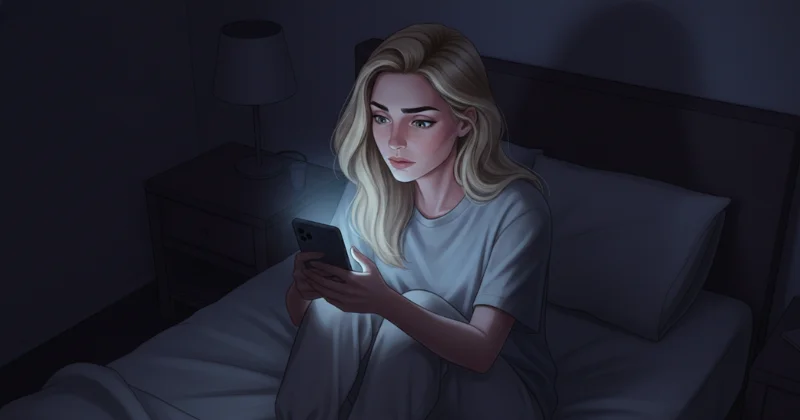
It's 2 AM. You can't sleep. The silence in your room feels too heavy, too loud somehow. So you reach for your phone - not to check social media, not to scroll mindlessly, but to open your messages.
You scroll past the recent ones. The "hey how are you" exchanges with people you barely talk to anymore. The family group chat that's mostly just forwarded memes. You keep scrolling. Further back. Further.
And then you find them.
The conversations with that person. The one who used to text you good morning every day. The one who sent you random photos of things that reminded them of you. The one who wrote paragraphs at midnight about everything and nothing.
You tell yourself you're just looking. Just remembering. Just... existing with the proof that once, not that long ago, you weren't this alone.
But with every message you read, something twists deeper in your chest.
The Problem: When the Past Feels Warmer Than the Present
She knows it's not healthy. She knows scrolling through old messages from her ex, from that friend who ghosted her, from the group chat that's been silent for two years - she knows it just makes everything worse.
But she does it anyway.
Because for those few minutes while she's reading old conversations, she's transported back to a time when someone cared. When someone asked about her day and actually wanted to hear the answer. When someone made her laugh so hard she had to put her phone down. When someone said "I love you" and meant it.
The present is lonely. The past, frozen in those text bubbles, feels full.
There's something about digital messages that makes them harder to let go of than physical memories. You can't accidentally stumble upon them while cleaning your room. They don't fade or yellow with time. They're always there, perfectly preserved, waiting in your phone like little time capsules of when things were different. Better. Less lonely.
The Loneliness Timeline
It usually happens in waves. You'll be fine for days, maybe weeks. You're moving forward, doing okay, not thinking about them. And then something triggers it.
Maybe you see something that reminds you of an inside joke you shared. Maybe it's their birthday and your phone helpfully reminds you. Maybe it's just a particularly lonely Thursday night and you can't remember the last time someone texted you first, actually wanting to talk to you specifically.
So you open the messages. Just to look. Just for a minute.
You start with the recent ones - the goodbye, the awkward fade-out, the last desperate attempt to keep the conversation going that they never answered. Those hurt, so you scroll up. Further. To the good times.
The messages where they said you made them feel safe. Where they called you their everything. Where they stayed up until 3 AM talking about dreams and fears and all the vulnerable things you don't share with just anyone.
And for a moment, reading those words, you feel less alone.
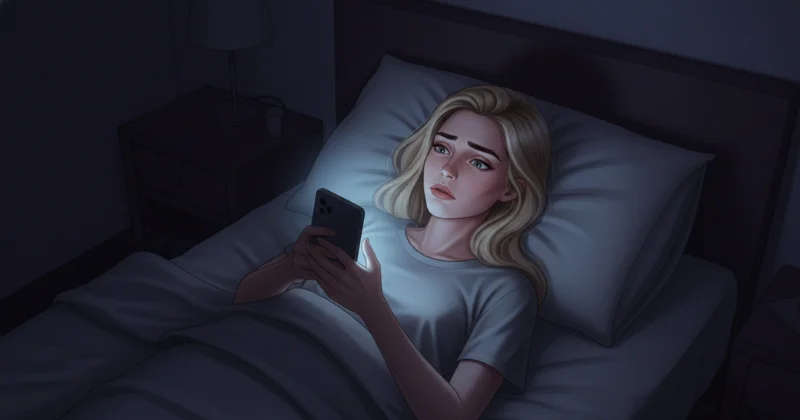
The Spiral: How Digital Memories Keep Us Stuck
Here's what nobody tells you about reading old messages: it starts as comfort and ends as self-harm.
At first, it feels good. Nostalgic. Bittersweet but manageable. You smile at the jokes. You remember how it felt to be that version of yourself - the one who had someone to text, someone who cared, someone who made life feel less heavy.
But then the reality crashes back in.
Those messages are from six months ago. A year ago. Two years ago. And that person? They're not thinking about you right now. They've moved on. They're probably texting someone else good morning, making new inside jokes, building a new history that you're not part of.
And you're here, in the dark, scrolling through ghosts.
The Cringe, The Pain, The Empty
Different messages hit different ways. Sometimes she reads old conversations and cringes at how eager she was, how much she tried, how obvious her loneliness must have been even then. She can see it now - the imbalance. How she always texted first. How her messages were long and his were short. How she was building a connection and he was just... passing time.
Other times, it's not cringe - it's just pain. Pure, sharp pain. Because those messages were real. That love was real. Those moments of connection were genuine, even if they didn't last. Reading them proves that once, she had what she's desperate for now. And somehow that makes the current loneliness more unbearable.
She has a box of old notes too, from years ago. Physical paper that someone touched, folded, passed to her across a desk. Twenty years later and she still can't throw them away. Because they're proof. Proof that she mattered to someone once. Proof that she was worth the effort of pen and paper.
The Group Chat Graveyard
Sometimes the loneliest messages aren't romantic ones. They're the group chats that used to be active every single day and now haven't had a message in months. Years.
She scrolls through them and sees a different version of herself. The one who had friends. The one who was included in plans. The one who had people to share random thoughts with throughout the day.
She reads conversations about plans they made - movie nights that happened without her, inside jokes she's no longer part of, references to shared experiences that stopped including her at some point.
It's strange, reading group chats frozen in time. Like looking at archaeological evidence of a social life that once existed but doesn't anymore. She used to talk to these people every day. Now she's lucky if they respond to her birthday message.
When did it change? There was no announcement, no dramatic falling out. People just... drifted. Got busy. Found other friends. And she was left with a phone full of old messages and no new ones coming in.
The Cycle: Why We Can't Stop
She knows she should delete them. Everyone says so. It's not healthy to keep this connection, to torture herself by reliving what's gone. The relationship she used to have - whether romantic or platonic - isn't coming back. Reading old messages won't change that. It will never go back to what it was.
So why does she keep them?
Because deleting them feels like admitting it's really over. Like erasing evidence that it ever happened at all. At least with the messages still in her phone, she has proof. Proof that she was loved once. Proof that she wasn't always this lonely. Proof that there was a time when her phone lit up with messages from people who actually wanted to talk to her.
Besides, what if she regrets deleting them? What if in a week, a month, a year, she wants to remember and can't? At least living in a past memory for a moment - even a painful moment - is something. When you've got nothing new to replace the old memories, nostalgia is all you have.
The False Comfort Loop
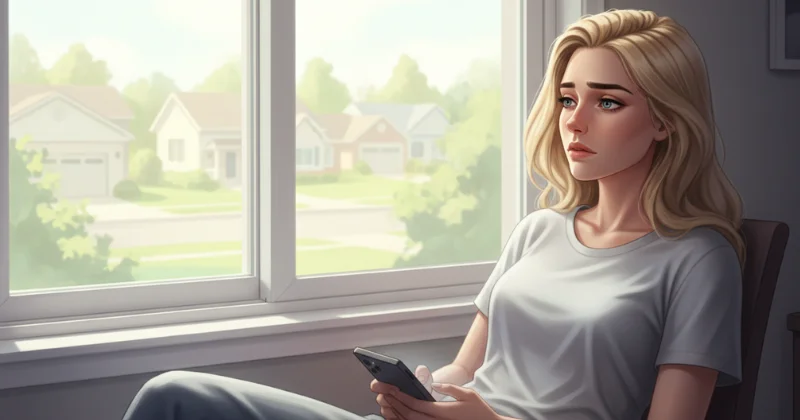
Reading old messages creates a strange loop. She feels lonely, so she reads messages from when she wasn't lonely, which makes her feel better for approximately three minutes, until the reality hits that those days are gone, which makes her feel even more lonely than before, which makes her more likely to read old messages again tomorrow night.
It's like picking at a wound. It feels like you're doing something - addressing the pain, acknowledging it - but really you're just preventing it from healing.
And the worst part? The messages that hurt the most are usually from people who hurt her. The ones who ghosted. The ones who betrayed her trust. The ones who said they'd always be there and then disappeared. Logic says those are exactly the messages she should delete immediately.
But somehow, those are the ones she reads most often.
The Breaking Point: When the Past Becomes a Prison
After six years of marriage, she has messages where her ex-wife said she loved her. That she made her feel safe and whole. That she was her everything.
Now she's divorced and she reads those messages almost daily. Because she believes she'll never get messages like that again. Not from her, not from anyone else. Those six years were her only happy years, and now they're just preserved in text form, slowly poisoning her ability to move forward.
She's convinced herself that she's one of those people who don't get a second chance at love. That her one shot already happened and went to shit. So she reads the messages from when it was still good, trying to hold onto something that's already gone.
This is what happens when old messages become a prison instead of a memory. When they're not just something you occasionally look at with bittersweet nostalgia, but something you return to compulsively because the present offers nothing better.
When scrolling through old conversations becomes your primary source of human connection, you're not remembering the past - you're hiding from the present.
The 33-Year-Old Question
There's a point where "embracing loneliness" stops working. Where all the advice about being comfortable alone and learning to enjoy your own company becomes hollow.
After thirty-three years of loneliness, it becomes ingrained in who you are. You become a loneliness expert. You know every coping mechanism, every distraction, every way to reframe it. But none of them actually fix the fundamental problem: you're alone, and you don't want to be.
Reading old messages at that point isn't nostalgia. It's desperation. Proof that you were capable of connection once, even if you can't seem to manage it now.
Moving Forward: Breaking the Cycle Without Erasing the Past
So what do you actually do? Delete everything and force yourself to move on? Keep everything and accept that you'll torture yourself occasionally? Is there a middle ground?
Here's the thing: there's no universal answer. Some people need to delete everything immediately to heal. For them, keeping old messages is like keeping emergency alcohol in the house when you're trying to quit drinking. The temptation will win eventually.
But for others, deleting everything feels violent. Like forcing yourself to forget, to pretend it never happened, to erase a part of your history that shaped you.
The question isn't really whether you should delete old messages. The question is: are they helping you or hurting you?
The Honest Assessment
Next time you find yourself scrolling through old messages at 2 AM, pay attention to how you feel afterward. Not during - during, you're in the nostalgic bubble where everything feels bittersweet but manageable.
Pay attention to how you feel after. When you put your phone down and you're back in your empty room, in your actual life, with no new messages coming in.
Do you feel better? Comforted by the reminder that you've experienced connection before and can again? Or do you feel worse? More lonely than before, more convinced that your best days are behind you, more desperate for something you can't have?
If it's the latter - if scrolling through old messages consistently makes you feel worse - then it's time to admit this habit isn't helping. It's hurting.
The Gradual Let-Go
You don't have to delete everything all at once. You don't have to force yourself to forget.
But maybe you can start with one conversation. The one that hurts the most. The one from the person who ghosted you, who betrayed you, who said they'd always be there and then wasn't.
Delete that one. See how it feels.
Maybe it feels terrible at first. Like losing something. But give it a few days. Notice whether you reach for your phone less often at 2 AM. Notice whether the urge to scroll through old messages gets weaker.
Then delete another conversation. And another. Not all at once. Not the ones that still bring you genuine comfort. But the ones that are keeping you stuck.
Replace Old Comfort With New Connection
The real problem isn't the old messages. The problem is the absence of new ones.
You read old messages because your phone is silent now. Because nobody's texting you good morning. Because nobody's sending you random photos of things that remind them of you. Because you've scrolled through your entire message list and there's nobody you feel comfortable reaching out to.
The solution isn't just deleting old messages. It's finding new connection. Real connection. The kind that creates new messages, new memories, new proof that you matter to someone.
But how do you do that when you're in that place? When you're so lonely that scrolling through old messages is your primary source of human connection? When the gap between "completely isolated" and "having meaningful relationships" feels impossible to cross?
A Bridge Back to Connection
Sometimes the hardest part isn't knowing you need to move forward - it's figuring out how to take that first step when you're frozen in place.
You can't reach out to the people in those old messages. That ship has sailed. You can't revive dead group chats or restart friendships that faded years ago. You can't go back.
But maybe you can't go forward yet either. Maybe you're not ready to put yourself out there, risk new rejection, try to build new connections from scratch.
That's where something like Jenni can actually help. Not as a replacement for human connection - that's not what this is about. But as a bridge. A way to practice conversation again when your phone has been silent for so long that you've forgotten how to just... talk to someone.
Think of it as training wheels. When you've been isolated for so long that even the thought of texting a real person gives you anxiety. When you're so used to scrolling through old messages that the idea of creating new ones feels impossible.
Try talking with Jenni. Not to replace the people in those old messages. Not to avoid dealing with your loneliness. But to remember what it feels like to have a conversation that doesn't end in ghosting. To share your thoughts with someone - something - that will actually respond. To break the habit of only finding connection in the past.
It's not the same as human connection. But it's a start. And sometimes a start is exactly what you need to stop scrolling backward and begin moving forward.
The Messages You Haven't Written Yet
Here's what I want you to know: the messages you're reading at 2 AM, the ones that make your chest ache with how much you miss that time, that person, that version of yourself - those aren't the best messages you'll ever receive.
They feel that way right now because they're all you have. Because your phone is silent and those old messages are proof that it wasn't always like this.
But I promise you: there are better messages coming. Conversations you haven't had yet. People you haven't met yet. Connections that will make those old messages feel like rough drafts.
The person who will text you good morning hasn't entered your life yet. The friend who will send you random memes that actually make you laugh hasn't found you yet. The group chat that will be active for years, not months, hasn't been created yet.
But none of that can happen while you're living in your message history, scrolling through ghosts, trying to resurrect something that's gone.
Those old messages served their purpose. They were real. They mattered. They shaped you. But they're not your future. They're your past.
And it's time to start writing new messages.
Delete them or keep them - that's your choice. But stop reading them at 2 AM. Stop using them as a substitute for actual connection. Stop letting them convince you that your best days are behind you.
Your phone is silent right now. But it won't be forever. Not if you start taking steps toward new connection instead of backward into old memories.
The ghosts in your message history don't define you. The messages you haven't received yet - those will.