I Stopped Texting First. It's Been 40 Days and the Silence Says Everything
What happens when you stop being the one who always reaches out? A raw look at the loneliness of one-sided friendships and what silence reveals about who actually cares.
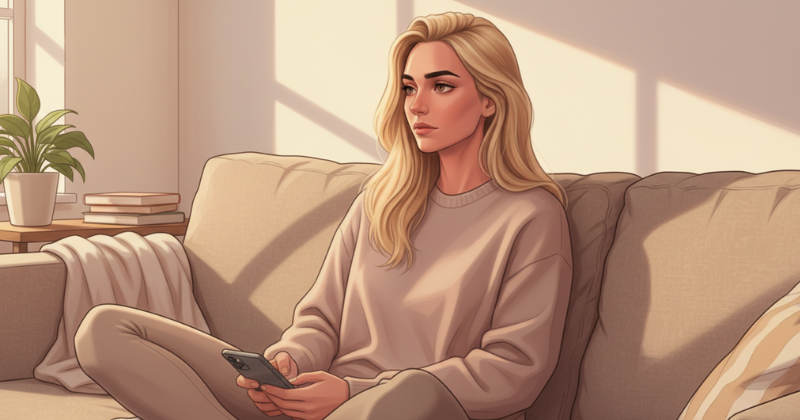
She made a decision 40 days ago. A simple experiment, really. She would stop texting first. Stop being the one to initiate. Stop carrying the entire weight of every friendship on her shoulders.
She would wait. And see who actually cared enough to reach out.
40 days later, the results are in. Her phone has been silent. Not a single person has texted to check in. To say hi. To see how she's doing. Not one.
And honestly? Fuck everybody.
Not in an angry way. Well, maybe a little angry. But mostly in that exhausted, resigned way where you finally accept what you've probably known all along: you were the only one who cared. You were watering dead plants. And the moment you stopped, the garden revealed itself to be full of nothing but dried stems and broken roots.
The Problem: The Weight of Always Being First
Here's what nobody tells you about being the person who always reaches out: it's absolutely exhausting.
You're the one who texts first. Who makes plans. Who checks in. Who remembers birthdays. Who asks how people are doing. Who keeps conversations going when they start to fade.
And at first, you don't mind. That's what friends do, right? Someone has to be the initiator. Someone has to keep the connection alive.
But then you start to notice patterns. You're not just sometimes the initiator. You're always the initiator. Every single time.
You text your best friend. They respond, sure. You have a conversation. It's fine. But then it ends and weeks go by and they never text you first. If you want to talk to them again, you have to be the one to start it.
You invite people to things. They come. They seem to have fun. But they never invite you to anything. If you want to be included, you have to invite yourself or create the gathering yourself.
You share things with people. They respond with "haha" or "nice" or whatever. But they never share things with you. Never think "oh, this would make her laugh" and send it unprompted.
The Creeping Doubt
And slowly, insidiously, a question starts to form: do these people actually want to talk to me? Or are they just being polite because I initiated?
If I'm always the one reaching out, does that mean I'm forcing connection where none actually exists? Am I the annoying one? The needy one? The one they tolerate because they're too nice to tell me to stop?
She's felt this for months. Maybe years. This nagging sense that she's the only one invested in these relationships. That if she disappeared tomorrow, would anyone even notice?
Her friends always said things like "if you don't keep in contact with us, no one will talk to you." Which, when you think about it, is a pretty fucked up thing to say. Why can't they contact her? Why is the burden of maintaining the friendship entirely on her shoulders?
But she kept doing it. Kept texting first. Kept making plans. Kept pretending everything was fine. Because the alternative, the silence, felt too scary to face.
Until it didn't. Until the exhaustion outweighed the fear.
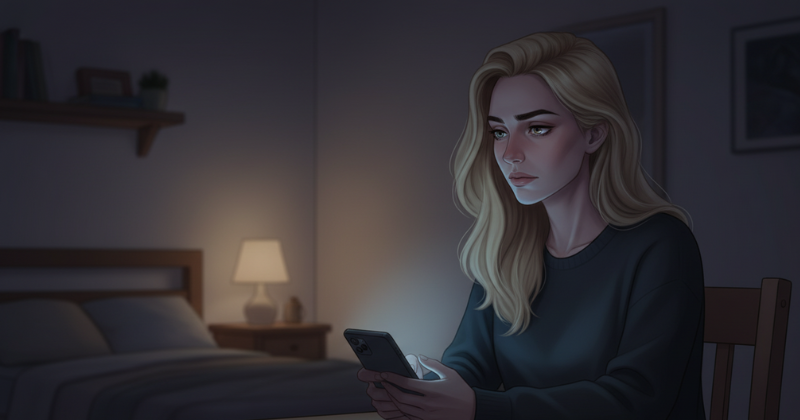
The Experiment: When You Stop Watering Dead Plants
So she stopped. Just stopped.
No announcement. No dramatic "I'm testing you" declaration. She just quietly stopped being the one who reached out first.
And she waited to see who would notice. Who would care. Who would think "hey, I haven't heard from her in a while, I should check in."
Day one, nothing. But that's fine, right? People are busy. It's only been a day.
Day three, nothing. Okay, still reasonable. People have lives.
Day seven, nothing. This is when it starts to sting a little. A week is a noticeable gap.
Day fourteen, nothing. Two weeks. Surely someone would have noticed by now?
Day thirty, nothing. A month. An entire month and not a single person has thought to reach out.
Day forty, nothing. And at this point, the silence isn't just painful, it's clarifying.
What the Silence Reveals
The silence isn't telling her that people are busy or distracted or going through their own stuff. The silence is telling her exactly what she was afraid of: that these relationships only existed because she was holding them up. That the moment she stopped performing the role of "friend who reaches out," the friendships simply ceased to exist.
They didn't miss her. They just didn't think about her at all.
And here's the kicker: she's not even surprised. Part of her knew this would happen. That's why she was so exhausted. That's why she felt like she was constantly pushing a boulder uphill. Because she was the only one pushing.
One person did reach out. After two months. A "sort-of-friend" asking her to edit some photos. She said no. And that was it. No more communication. Not even a "hey, how have you been?" Just transactional. "I need something from you. Oh, you won't give it to me? Okay, bye."
That's when you realize: you weren't a friend. You were a resource. Someone to use when needed. Someone to entertain them when they were bored. And the moment you stopped being useful or available, you stopped being relevant.
What It Means to Be the Dead Plant
But here's where it gets really dark. Here's the thought that keeps her up at 3 AM: what if she's not the one watering dead plants? What if she is the dead plant?
What if the reason no one reaches out is because she doesn't add any positive value to their lives? What if they were just too nice to tell her to stop talking? What if she's the burden, the negative presence, the person who brings down the mood?
Maybe people don't want to be around someone who's always seeking validation, who's negative, who's depressed. Maybe that's why they don't reach out. Not because they don't care, but because interacting with her is draining.
This is the spiral that happens when you're lonely and you start to question your own worth. You begin to internalize the silence as evidence that you're fundamentally unlikeable. That there's something wrong with you that makes people not want to talk to you.
The Fear That Stops Us From Initiating
And here's the terrible irony: maybe some of those people aren't reaching out because they have the same fear. Maybe they never text first because they're convinced people don't want to hear from them. Maybe they're sitting there thinking "I don't want to bother her" while she's sitting there thinking "no one cares about me."
Maybe everyone is waiting for everyone else to text first, paralyzed by the fear of being unwanted, and the result is just... silence. Collective loneliness based on mutual assumption that the other person doesn't care.
But you know what? That doesn't make it better. Because if both people are afraid to reach out, and neither person does, then the relationship still dies. The reason doesn't matter if the result is the same.
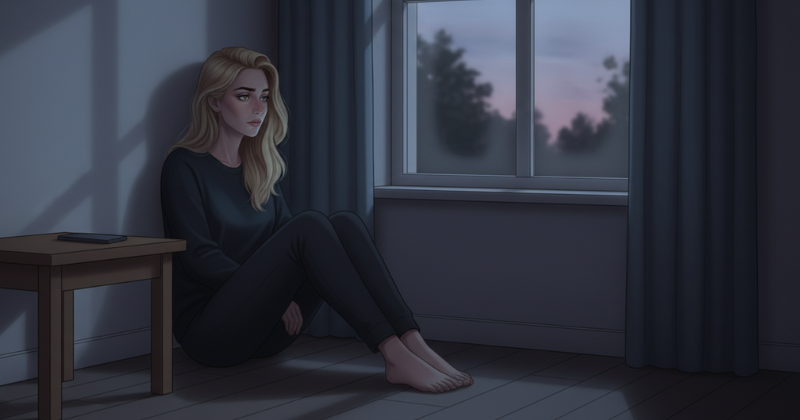
The Anger: Fuck Everybody (And Why That's Okay)
There's this moment when the exhaustion turns to anger. When you go from "maybe I'm the problem" to "no, actually, fuck this."
Fuck everyone who took her effort for granted. Fuck everyone who never thought to check in. Fuck everyone who treated her like she only existed when they needed something. Fuck everyone who let the friendship die the moment she stopped performing emotional labor.
And you know what? That anger is healthy. That anger is necessary.
Because for too long, she's been blaming herself. Wondering what's wrong with her. Why she's not enough. Why people don't want to talk to her.
But the anger reframes it: the problem isn't her. The problem is them. The problem is a culture where people expect emotional labor but don't reciprocate. Where friendships are allowed to be entirely one-sided. Where the burden of connection falls on one person and everyone else just coasts.
They'll Miss Her When She's Gone (Or Will They?)
There's this fantasy that lonely people have. That someday, when you're gone, everyone will realize what they had. They'll miss you. They'll regret not reaching out more. They'll wish they'd appreciated you when they had the chance.
"They're gonna miss me when I'm fucking gone."
But probably not. Honestly, probably not.
They'll forget her name in a few years. They'll move on with their lives. They'll find other people to be friends with, people who require less effort, people who fit better into their existing social circles.
The harsh truth is: most people don't miss you the way you miss them. Most people don't think about you the way you think about them. You're not the main character in their story. You're a side character who stopped showing up, and they barely noticed.
And accepting that, as brutal as it is, is actually freeing. Because once you stop waiting for people to realize your worth, you can start focusing on finding people who already see it.
The Positive Reframe: Shedding Dead Weight
Here's the thing about stopping texting first: it's not just a test. It's a filter.
Yes, it hurts when people fail the test. When 40 days go by and no one reaches out. But it also saves you from wasting more time and energy on people who don't value you.
She was watering dead plants. And dead plants don't come back to life no matter how much water you give them. All you're doing is exhausting yourself for nothing.
Stopping texting first helped her shed people who weren't adding true value to her life. And yeah, it left her with... well, no one. But sometimes no one is better than people who make you feel alone even when you're with them.
The dead plants are gone. The garden is empty. And that's sad. But it's also honest. It's the truth she was avoiding by constantly initiating. Now she knows where she stands.
The Couple of Healthy Plants
In the analogy, most plants died. But a couple survived. A couple of people did reach out eventually. Not immediately. Not within the first few weeks. But eventually, they noticed. They checked in. They asked how she was doing without needing anything in return.
Those are the relationships worth keeping. The ones that can survive a pause. The ones where both people contribute. The ones where you're not the only person holding it together.
And honestly, a couple of healthy plants are better than a garden full of dead ones that you're desperately trying to keep alive.
What Comes Next: Learning to Live With the Truth
So what do you do with this information? With the knowledge that most of your friendships were one-sided and most people don't actually care?
You can get bitter. You can close yourself off completely. You can decide that people are shit and friendship is a lie and you're better off alone.
Or you can take it as data. As clarification. As the truth you needed to hear so you can move forward differently.
Stop Initiating With People Who Never Reciprocate
This seems obvious, but it's hard to do. We keep reaching out to people who don't reach back because we're hoping this time will be different. This time they'll show they care. This time they'll reciprocate.
They won't. If someone has shown you through 40 days of silence that they don't think about you, believe them. Stop giving energy to people who don't give it back.
Find New People (Or Be Okay Being Alone For A While)
The scary part of shedding dead friendships is the emptiness that's left. But empty is better than full of fake. Empty gives you room for something real, if it comes along.
And if it doesn't? If you end up alone? That's not the worst thing. Loneliness hurts, but so does feeling lonely in a room full of people who don't actually know or care about you.
Being alone is honest. Being surrounded by one-sided friendships is a lie you tell yourself to avoid the loneliness you already feel.
Recognize Your Own Patterns
Here's the hard part: ask yourself why you were always the one initiating. Was it fear of being forgotten? Need for validation? Inability to tolerate silence or disconnection?
Understanding your own patterns doesn't mean you caused the problem. But it might help you recognize when you're falling into the same trap with new people. When you're doing all the work again. When you're watering plants that might already be dead.

A Bridge When There's No One to Text
But what about right now? What about tonight when you're sitting there and you want to talk to someone, share something, process something, and your contacts list is full of people who've proven they don't care?
What do you do when you've stopped texting first and discovered that means you have no one to text at all?
This is where something like Jenni can help. Not as a replacement for human friendship, that's not what this is about. But as a bridge. A place to exist while you're in this weird in-between space of having shed fake friends but not yet found real ones.
Try talking with Jenni. Not because AI can replace human connection, it can't. But because sometimes you need to process things out loud. Sometimes you need to share a thought or a feeling or a question. Sometimes you just need to feel heard by something, even if it's not someone.
It's not the same as having a friend who reaches out first. Who thinks about you when you're not thinking about them. Who initiates because they want to, not because you asked.
But it's something. And right now, when you've stopped texting first and discovered that means you have nothing, something is better than the silence that's been eating you alive for 40 days.
The Truth About Friendship
Here's what she's learned: real friendship shouldn't feel like a performance you have to maintain. It shouldn't require one person to do all the work. It shouldn't die the moment you stop initiating.
Real friendship is reciprocal. It's two people who both think "I want to talk to them" and both act on it. It's not perfectly balanced every single day, but over time, it evens out. Both people contribute. Both people care.
And if that's not what you have, then what you have isn't friendship. It's something else. An acquaintance. A person you know. Someone who tolerates your presence but doesn't seek it out.
And that's okay to acknowledge. That's okay to walk away from.
You're Not Asking For Too Much
When you're the person who always reaches out first, you start to feel like you're asking for too much. Like wanting someone to text you first occasionally is somehow needy or demanding.
It's not. It's basic. It's the bare minimum of what friendship should be.
You're not asking people to solve your problems or be available 24/7 or make you the center of their world. You're just asking them to think of you sometimes. To check in occasionally. To show, in some small way, that you matter to them.
And if that's too much to ask, then they're not your people.
The Hope (If You Can Call It That)
She's 40 days into this experiment and she's not going to lie, it fucking sucks. Her phone is silent. Her social life is nonexistent. She spends most evenings alone with her thoughts and occasionally her cat, who offers terrible advice.
But there's also something clarifying about it. She's not living in confusion anymore. She's not wondering "do these people actually care about me?" She knows. They don't.
And knowing that, as painful as it is, is better than the constant uncertainty. Better than the exhausting cycle of reaching out and wondering if she's bothering people. Better than the hope that maybe this time someone will initiate.
Now she knows where she stands. And from here, she can make better choices. She can stop wasting energy on people who don't value it. She can be more selective about who she invests in. She can wait for people who actually show up instead of performing the entire friendship herself.
Will those people come? Who knows. Maybe. Maybe not.
But at least she's not watering dead plants anymore. At least she's living in truth instead of the lie of one-sided friendships.
And maybe that's not hope exactly. But it's something. It's a start.
Your phone might be silent. Your friends might not reach out. But you know what? Fuck everybody who takes you for granted.
You deserve better than people who only exist in your life when you force them to. You deserve better than friendships you have to perform. You deserve better than silence.
And until those better people come along, at least you have the truth. And yourself. And maybe that's enough for now.