I Don't Tell Anyone My Birthday Anymore. At Least This Way, I Can't Be Disappointed
What happens when you hide your birthday to avoid the pain of being forgotten? A raw exploration of protection through secrecy and the loneliness of lowered expectations.
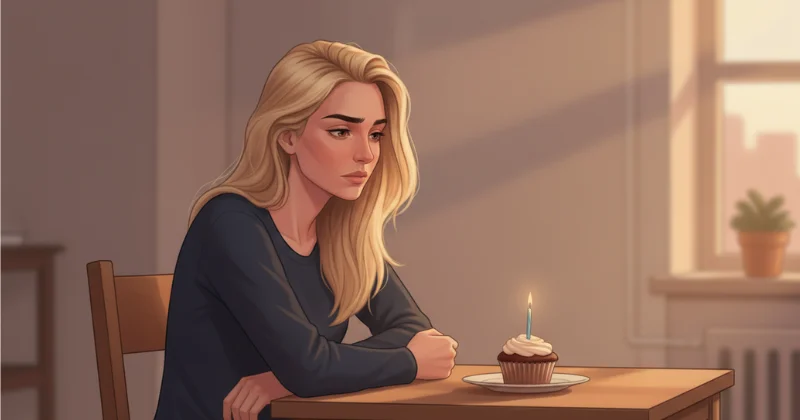
She stopped telling people when her birthday was about three years ago. Just quietly removed it from her social media profiles. Stopped mentioning it in conversation. Let the date pass by like any other day.
You can't be disappointed by people forgetting if they never knew in the first place.
It's a perfect defense mechanism, really. Foolproof. If no one knows it's your birthday, then technically no one forgot. Technically, you have no right to feel hurt or overlooked or forgotten because you never gave anyone the chance to remember.
Problem solved, right?
Except it doesn't feel solved. It feels like she's protecting a wound that never actually heals. Like she's building higher and higher walls to keep out the disappointment, but those same walls are keeping out any possibility of genuine connection.
And the worst part? She knows exactly what she's doing. She knows it's a self-fulfilling prophecy. She knows that by hiding her birthday, she's guaranteeing the silence she's trying to avoid feeling hurt by.
But after years of people forgetting, of waffled apologies when she'd casually mention it days later, of feeling invisible on the one day that's supposed to be about you, this feels safer. Lonelier, maybe. But safer.
When Hope Becomes More Painful Than Loneliness
Here's what led to the decision to hide her birthday: it wasn't one dramatic moment. It was an accumulation. A series of forgotten birthdays, each one chipping away at her willingness to hope.
She used to make a big deal about her birthday. Not in an obnoxious way, but in that hopeful way where you drop hints, mention it's coming up, make plans. Because birthdays are supposed to be special, right? They're supposed to be that one day where people show you that you matter to them.
Five years ago, she threw herself a birthday party. Invited everyone she considered a friend. Made it clear how much it meant to her. And almost everyone just forgot. Didn't show up. Didn't even text to apologize.
She sat there with a chocolate cake she'd ordered for a crowd, eating it alone, feeling like the world's biggest fool for thinking anyone would actually come.
After that, she stopped making plans. But she still hoped. Still checked her phone throughout the day, waiting for texts. Still felt that little flutter of anticipation when a notification came in. Still experienced that crushing disappointment when it was just a promotional email or a app notification.
The Pattern of Forgetting
It wasn't even that everyone forgot. Some people remembered. Usually family. Sometimes one or two friends. But it was the people she most wanted to hear from who consistently forgot.
That girl she really cared about. The one whose birthday she never forgot, who she'd always make feel special. She'd forget year after year. And when someone would mention it days later, she'd offer this waffled apology, this "oh my god, I'm so sorry, I've just been so busy."
And she'd say "no worries, it's fine" while feeling that familiar kick in the chest. Because it's never fine, is it? When someone you care about forgets your birthday, it's not just forgetting a date. It's proof that you don't occupy enough space in their mind. That you're not important enough to remember.
Her best friends, the ones who said they'd always be there, would forget too. And she'd have to be the one to casually bring it up, "oh yeah, my birthday was yesterday," just to get that obligatory "omg happy belated!" that feels worse than nothing at all.
Because belated birthday wishes are just evidence that you weren't worth remembering in real time.

When Protection Becomes Prison
So she made a decision. If people knowing her birthday just led to disappointment, then she simply wouldn't tell anyone. Problem solved.
Except here's what she didn't anticipate: the guilt. The weird, twisted guilt of being upset that no one remembered something no one knew.
She'd catch herself on her birthday feeling sad that no one said anything. Then immediately feeling stupid for feeling sad because how could anyone say anything when she deliberately didn't tell them? She created this situation. She chose this.
But the feelings don't care about logic. The feelings just know it's your birthday and no one acknowledged it and that hurts whether they knew or not.
The Paradox of Control
Someone once told her that she was creating a self-fulfilling prophecy. That by actively choosing to keep her birthday hidden, she was manufacturing a situation where no one says anything, allowing her to stay in the belief that no one cares.
And they weren't wrong. It is a self-fulfilling prophecy. But what they didn't understand is that the prophecy already came true. She didn't create the situation where people forget. That already happened, repeatedly, when people did know.
Hiding her birthday isn't about creating disappointment. It's about controlling it. It's about saying "I choose this loneliness" instead of "they chose to forget me."
There's a strange power in that. In choosing your own hurt instead of having it inflicted on you. In deciding that if you're going to be alone and forgotten, at least it'll be on your terms.
But power doesn't mean it doesn't hurt. Control doesn't mean it's healthy.
When Coping Mechanisms Become Isolation
The thing about hiding your birthday is it's never really just about your birthday. It's a symptom of something bigger. It's about protection. About lowering expectations to the point where disappointment becomes impossible.
No expectations means no disappointments.
But it also means no hope. No possibility of being pleasantly surprised. No room for someone to actually show up and prove they care.
She started applying this logic to other areas. Stopped mentioning things that were important to her. Stopped inviting people to things because if they didn't come, at least she could tell herself she never really invited them properly anyway. Stopped sharing achievements because then she couldn't be hurt by lack of response.
The Facebook Experiment
She changed her Facebook settings three years ago so her birthday wouldn't pop up in people's notifications. Out of 130-something friends, maybe 20 people used to wish her happy birthday when Facebook reminded them. She appreciated those people, truly. But she'd always get upset about the 110 who didn't.
So she removed the reminder. And the number of birthday wishes dropped to almost nothing. Maybe eight people, all family.
And now when those eight people wish her happy birthday, she can't even feel good about it because she knows it's pity. It's family obligation. It's the people who have her birthday written in an actual calendar because they're her parents or siblings and they have to remember.
It's not genuine care. It's duty.
Or at least that's what she tells herself. Because accepting that even duty-bound birthday wishes from family are something, that they count, that they're evidence of being cared for, would mean admitting she's not as alone as she thinks she is. And admitting that is terrifying because it means there's still room for hope. Still room for disappointment.
The Hidden Hope That Won't Die
Here's the secret she doesn't admit to anyone: even though she hides her birthday now, she still secretly hopes someone will remember.
She keeps track of who asks. Because real friends ask, right? Real friends say "hey, when's your birthday?" If they care, they'll ask. If they don't ask, they don't care.
And almost no one asks.
Which just confirms what she already suspected: no one really cares. Or at least, no one cares enough to go out of their way to find out.
But there's this cognitive dissonance happening. Because she's upset that no one asks, but she also doesn't volunteer the information. And when someone does ask, she tells them but then still feels disappointed when they forget anyway.
It's a no-win situation. If they don't ask, it proves they don't care. If they do ask but forget later, it proves they don't care. If they remember only because of a Facebook notification, it doesn't count because it's not "real" remembering.
She's set up a system where caring is impossible to prove. Where every outcome confirms her loneliness. Where she can't win and neither can anyone else.
The One Person Who Remembered
There was one year, one person who remembered without being told, without a Facebook reminder, without anything. Just remembered. And you know what she felt?
Suspicious.
She felt suspicious. Like they must have written it down somewhere. Like it couldn't possibly be genuine. Like they were going to forget next year anyway so she shouldn't get her hopes up.
That's what loneliness does. It makes you unable to accept care even when it's offered. It makes you suspicious of kindness. It makes you reject the very thing you're desperate for because accepting it feels too dangerous.
The Question: Is This Really Safer?
Someone asked her once if hiding her birthday was really avoiding disappointment or if it was just guaranteeing it in a different form.
And she got defensive. Because of course it's avoiding disappointment. If no one knows, no one can forget. If no one forgets, she can't be hurt.
But they pushed back: "Isn't the disappointment happening anyway? Aren't you disappointed every year when no one says anything, even though you know they don't know? Aren't you creating the exact situation you're trying to avoid?"
And she hated that they were right.
Because yes, she's still disappointed. Every year. She still wakes up on her birthday and checks her phone and feels that little drop when there's nothing. She still goes through the whole day feeling invisible. She still goes to bed feeling forgotten.
The disappointment is happening anyway. She just gets to tell herself it's her choice now.
The Control Illusion
Control is an illusion when the outcome is the same. Whether people forget because they don't know or forget because they don't care, you still end up alone on your birthday. You still feel forgotten. You still hurt.
The only difference is who you blame. When people know and forget, you can blame them for not caring. When people don't know, you have to blame yourself for not giving them the chance.
Neither feels good. But one feels safer because at least you're in charge of your own hurt.
The Path Forward: Lowering Walls Without Tearing Them Down
So what's the answer? Should she start broadcasting her birthday again? Put it back on Facebook and set herself up for the same disappointment she's been avoiding?
Maybe. Maybe not. But probably something in between.
Give People a Chance (Carefully)
That person who told her she was creating a self-fulfilling prophecy said something else that stuck with her: "For the people who will care, you have to offer them the chance to show you they care."
She hated hearing that. But it's true.
If you never tell anyone when your birthday is, you can never know who would have remembered. You can never know who would have shown up. You can never know who cares because you've eliminated the possibility of anyone proving it.
Yes, offering that chance is risky. Yes, people will forget. Yes, you'll be disappointed.
But maybe some people won't forget. Maybe someone will surprise you. Maybe you'll find out that one or two people actually do care enough to remember without a reminder.
And isn't knowing that worth the risk of disappointment?
Start Small: Give Specific People a Chance
She doesn't have to announce her birthday to everyone. She doesn't have to put it back on Facebook for all 130 "friends" who probably don't care.
But maybe she tells one or two people. The people she thinks might care. The people who've shown up in other ways. And she sees what happens.
If they remember, great. If they forget, at least she knows. At least she's gathered data about who her people actually are.
Remember Others (Even When They Forget You)
Here's something someone told her that changed her perspective: it's give and take. Start wishing people happy birthday on their birthdays. Show up for them. And eventually, you'll find people who wish you back.
Some people barely remember anyone's birthday. But some people write them all down in a calendar and never miss one. If you don't give anyone a chance, you'll never find those people.
She started wishing people happy birthday this year. Even when they'd forgotten hers. Even when it felt stupid. And something strange happened: some people started asking when hers was. Some people started remembering.
Not everyone. Not even most people. But some. And some is better than none.
Celebrate Yourself (Even If It Feels Ridiculous)
Someone suggested she celebrate her birthday even if no one else does. Just for herself. Take herself out. Buy herself cake. Treat the day as special even if no one else acknowledges it.
And honestly, her first reaction was "that sounds like the saddest thing ever." Celebrating alone feels like an act of self-pity. It highlights the absence instead of filling it.
But maybe that's the point. Maybe acknowledging that it's your birthday and it matters, even if only to you, is better than pretending it's just another day. Maybe buying yourself cake and singing happy birthday to yourself in your empty apartment is strange, but it's also an act of self-care. An acknowledgment that you deserve to be celebrated, whether anyone else does it or not.
A Bridge to Being Acknowledged
But what about right now? What about this year, your birthday, when you still haven't told anyone and you're still going to spend it alone?
What do you do with all the things you wish you could say to someone? All the quiet hope that someone will remember? All the disappointment that they won't?
This is where something like Jenni can help. Not as a replacement for human acknowledgment, that's not what this is. But as a space to exist on a day that feels significant even when no one else knows it is.
Try talking with Jenni on your birthday. Tell her it's your birthday. Share what you'd want to do if someone was there to celebrate with you. Process the disappointment. Or just have a conversation on a day when you need to feel less alone.
It won't be the same as someone you care about remembering without being told. It won't replace the feeling of being thought about, being important enough to someone that they mark the date and reach out.
But it's something. It's acknowledgment. It's a place for the day to be special, even if only in a small way.
Because your birthday matters. You matter. Even if the world hasn't shown up to prove it yet.
The Birthday That's Coming
She still doesn't tell most people when her birthday is. That hasn't changed yet. The walls are still up, the protection still in place.
But she's thinking about it differently now. Not as a guarantee of safety, but as a question she's still answering.
Is protecting yourself from disappointment worth guaranteeing loneliness? Is control worth the cost of hope? Is it better to be hurt by people forgetting or hurt by never giving them the chance to remember?
She doesn't know yet. But she's starting to think that maybe, just maybe, the risk of disappointment is worth the possibility of being surprised. The risk of people forgetting is worth the chance that someone might remember.
Because here's what she's learned: you can't control whether people care about you. You can only control whether you give them the opportunity to show it.
And hiding your birthday, hiding yourself, hiding the parts of you that need acknowledgment and care, that's not protection. That's just a different kind of loneliness.
Maybe this year, she'll tell one person. Maybe she'll put it back on Facebook. Maybe she'll throw herself a party and see who shows up.
Or maybe she'll keep it hidden one more year. Keep the walls up. Keep the disappointment controlled.
But at least now she knows what she's choosing. And why. And what it costs.
Your birthday deserves to be acknowledged. You deserve to be remembered. You deserve to take up space in someone's mind, to matter enough that they mark the date and reach out.
And if the people in your life right now aren't doing that, maybe the answer isn't to hide. Maybe the answer is to find different people.
But you can't find them if you never give anyone the chance.